

A Season of Connection, Compliance & Transformation
By Electronic Invoicing Global – September 2026 – 5 min read
This spring and early summer, Electronic Invoicing Global (EIG) and TriFinance took the stage at three events. Our team engaged with finance, tax, IT and treasury professionals navigating the accelerating shift toward digital finance.
Below is a recap of each event with the insights shared, the conversations sparked, and the practical guidance delivered. So let us take a look at the Finance Flow 2026, our BVCM x EIG webinar, and our collaborative session with GVC.

Finance Flow 2026
From Reactive Reporting to Proactive Control
This year’s Finance Flow Conference in Utrecht brought together finance leaders looking for pragmatic ways to tackle mandatory e‑invoicing readiness, the practical impact of automation and AI on day‑to‑day finance work. On the exhibition floor we were one of the few organisations whose offering was explicitly grounded in legal and regulatory expertise; a distinction that mattered given the compliance‑driven nature of many projects.
A Hands‑On Presence at Stadion Galgenwaard
Our consultants Esmee Turien and Jelmer Bode-Dapsy represented TriFinance & EIG throughout the event, demonstrating how organizations can move “from reactive reporting to proactive control”. Esmee focused on interpreting evolving mandates and what they mean in practice; Jelmer concentrated on Purchase‑to‑Pay improvements and pragmatic steps to turn fragmented data into a reliable P2P flow. Visitors could see live demos of the EIG knowledge base covering 130+ countries, get clarity on cross‑border implications and the upcoming European Business Wallet, and discuss concrete next steps with our specialists.
Most other participants were invoicing systems and mandated service providers, which made the event feel like a busy marketplace of solution vendors. That abundance is useful, but it also creates a real challenge for organisations: as more solution providers enter the space, it becomes harder to identify the partner that truly matches your legal, technical and operational needs. Product demos rarely answer the critical questions about compliance, data flows and long‑term maintainability.
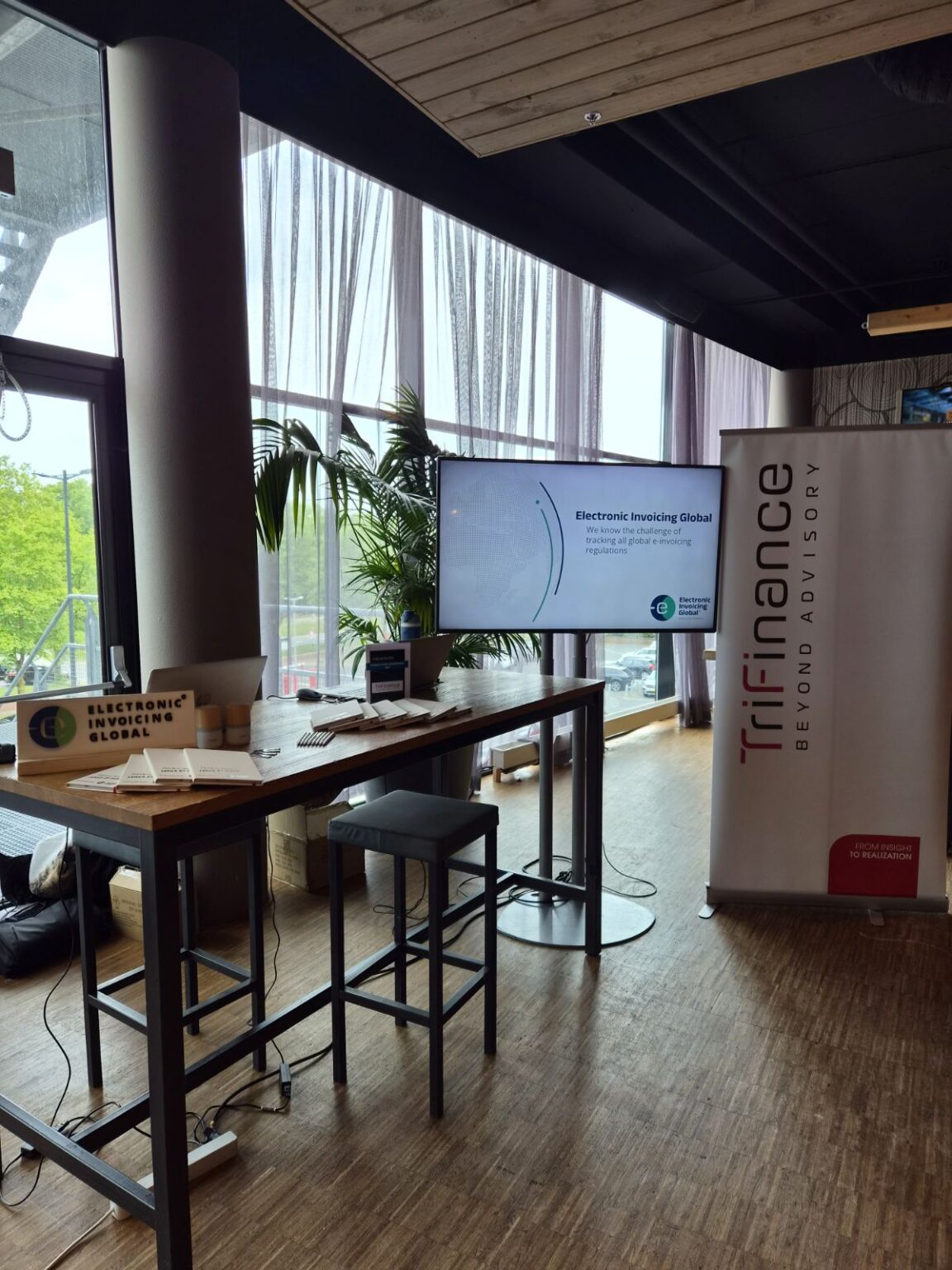


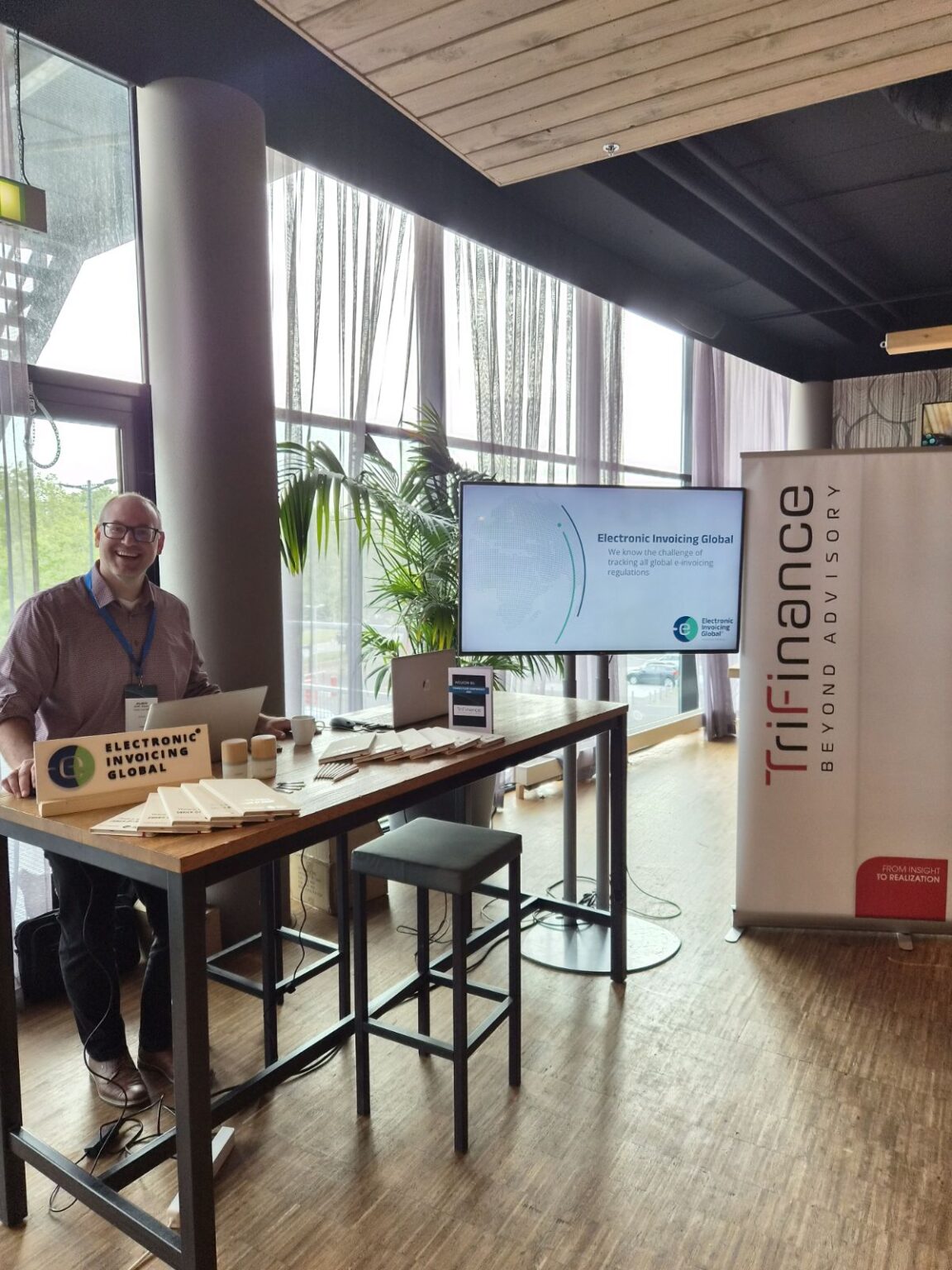
At the conference we aimed to be quietly practical: helping organisations translate legal requirements into the right selection criteria and connecting them with specialists who match their needs. The EIG knowledge base plays a central role in that work:
- Offering comprehensive, government‑sourced coverage across B2G, B2B and B2C segments;
- Verified regulatory detail bi‑weekly country updates;
- SAF‑T information where available;
- And expert access through quarterly consultations and tailored briefings for top‑tier clients.
Across the conference the message was clear:
Compliance‑driven transformations need more than attractive product features. They need legal certainty, disciplined provider selection and pragmatic execution, and that is exactly where our focus remains.
BVCM & EIG
Joint Seminar on E‑Invoicing & VIDA
Alongside Finance Flow, we partnered with BVCM for a focused information session on the EU’s VAT in the Digital Age (ViDA) initiative and practical e‑invoicing readiness. On 20 May 2026 at Van der Valk Hotel Houten, the room was full of finance, AP/AR, tax, IT and treasury professionals looking for clear, actionable guidance, not just theory.
During the session, Esmee Turien and David Busby walked the audience through the story behind ViDA: from the EU‑level vision to what it means in practice for finance teams. We then zoomed in on country‑specific e‑invoicing legislation, upcoming mandates, and the concrete compliance challenges organisations are already facing.
ViDA is the EU’s programme to modernise VAT reporting and invoicing across member states. It aims to move VAT compliance toward more real‑time, digital processes by defining common principles, data requirements and reporting models. The initiative is structured around three pillars (data exchange, reporting and clearance‑type models), and different countries will adopt different combinations of those pillars. This means organisations must understand which pillar(s) apply to them and how multiple obligations can interact.
A Short Primer On VIDA
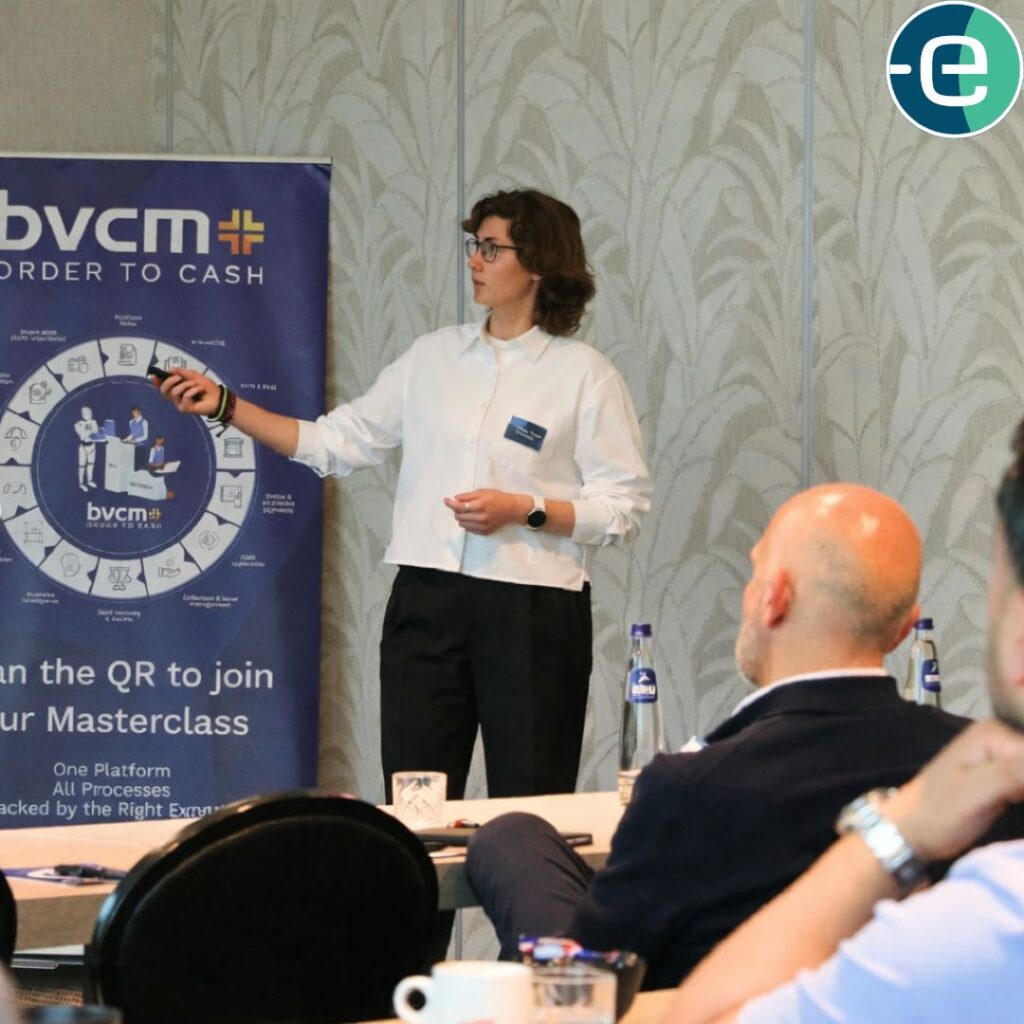
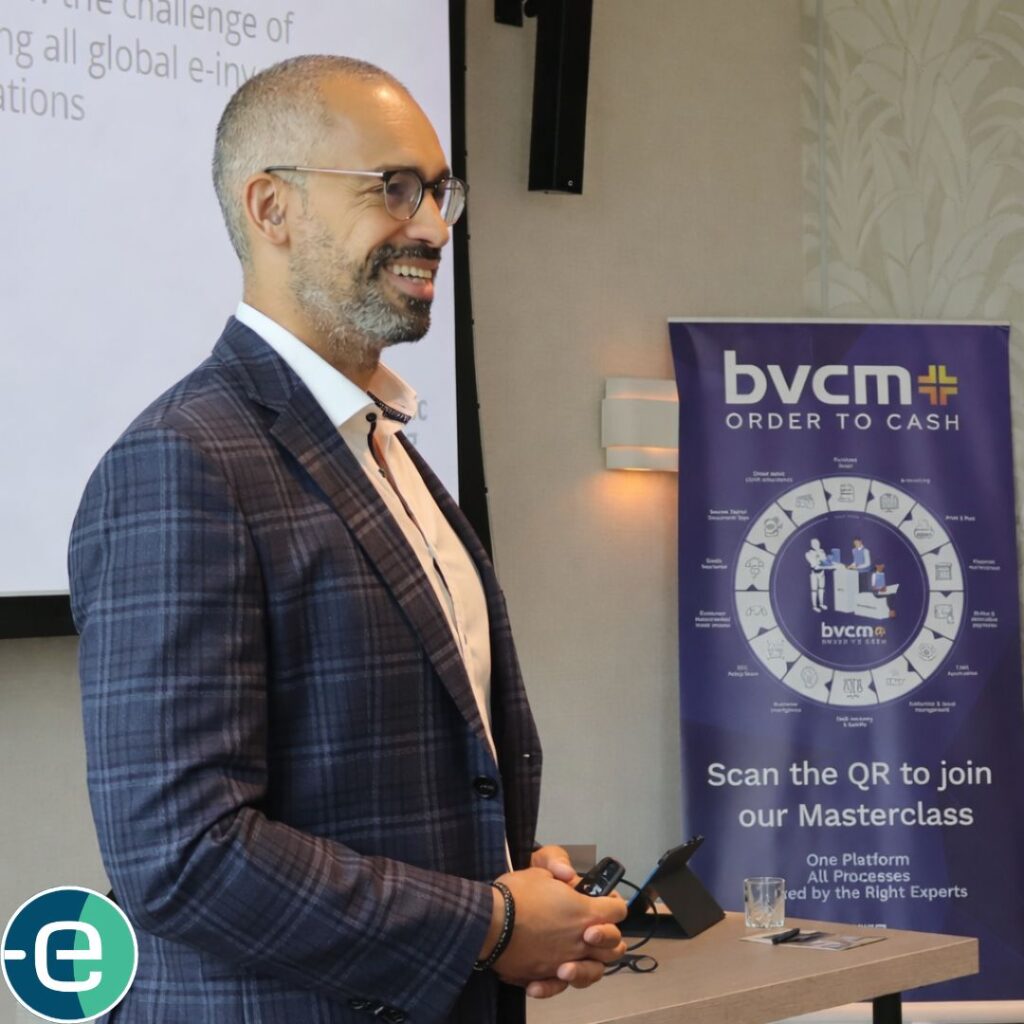
The session covered e-invoicing compliance from fundamentals to cross-border complexity. Participants gained a clear understanding of what e-invoicing actually is, how clearance models and mandates differ across countries, what invoice integrity requirements mean for auditability, and how to distinguish mandatory obligations from advisory ones. The group also explored Peppol’s role in public procurement, the EU’s ViDA initiative and its three pillars, and why the interaction of national models, cross-border flows, and retention rules creates real complexity for compliance teams and systems alike.
The session made clear that e-invoicing and ViDA are not purely technical projects. They carry legal, operational and strategic weight. End-to-end integration across Peppol/UBL, ERP systems and service providers is essential to avoid fragmentation and reduce implementation risk.
The consistent message throughout:
Finance teams need clarity, integration and practical next steps, and that is what EIG aims to deliver.
GVC & EIG
Joint Webinar on The French E-Invoicing & E-Reporting Reform
Our latest collaboration was with Global VAT Compliance, co-hosting a webinar on France’s e-invoicing and e-reporting mandate as one of the most technically demanding reforms currently active in Europe. With over ten million economic actors, roughly 140 accredited private platforms and a dozen possible invoice lifecycle statuses, France requires operational precision that catches many internationally active businesses off guard. The session was built around one governing principle: where a transaction sits in the French system determines every obligation that follows.
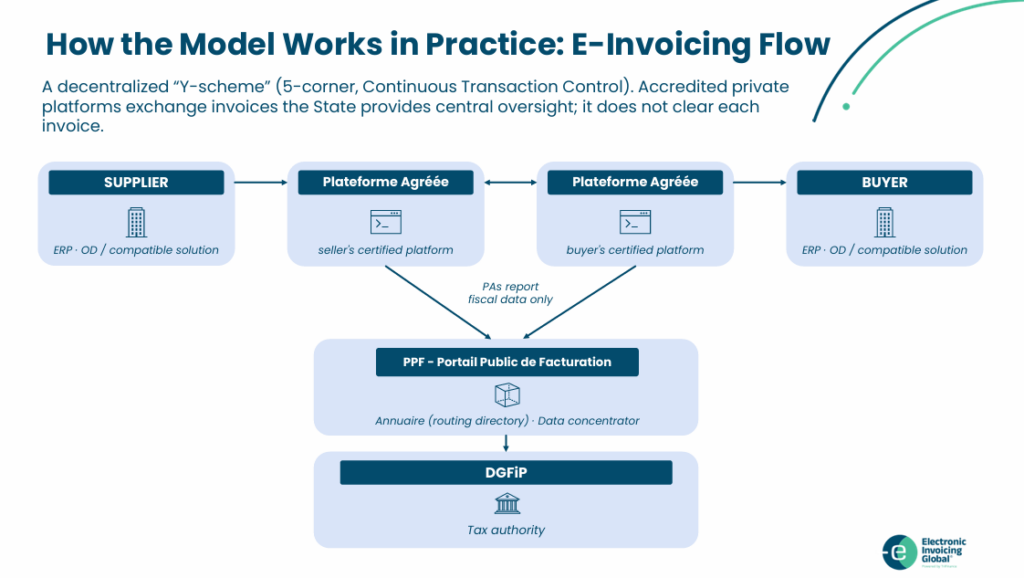
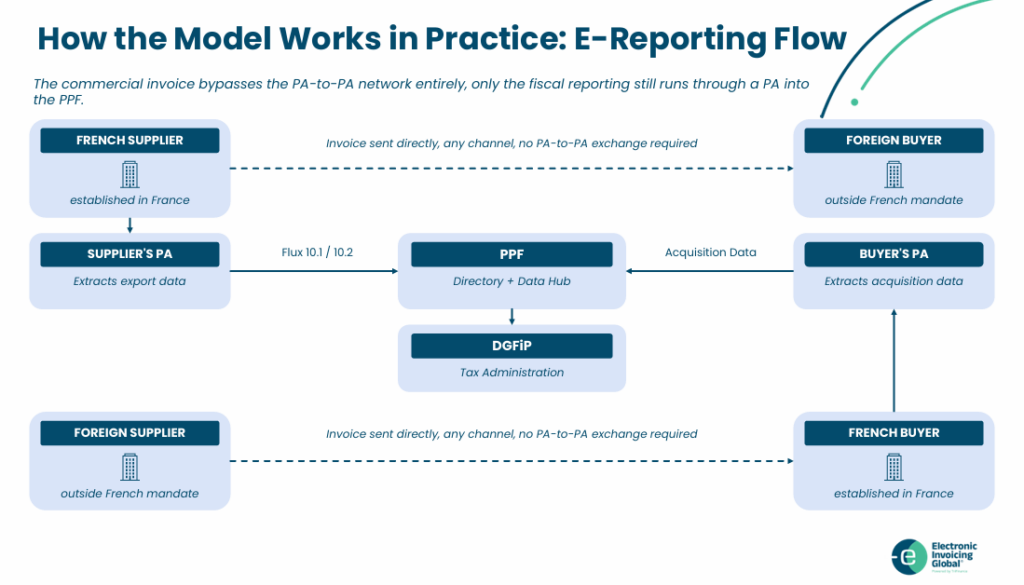
The mandate covers three distinct obligations.
- E-invoicing governs structured exchange between French-established parties via an accredited platform (Plateforme Agréée) in Factur-X, UBL or CII format.
- Transaction e-reporting applies to everything else, whoever owes the VAT on a French transaction, reports it.
- Payment e-reporting adds a third layer for cash-basis services.
For non-established companies, most fall under the réel normal monthly regime, meaning 36 reporting deadlines a year rather than 12. Large and mid-size enterprises must receive and emit via a PA from 1 September 2026; SMEs join for sending e-invoices from September 2027. Business continuity provisions allow PDF and paper invoices to remain valid in the startup phase, but only for companies demonstrating an active, documented trajectory toward full electronic compliance.
At Electronic Invoicing Global we know the challenge of tracking all global e-invoicing regulations, especially looking at a difficult mandate such as France. Our database with 130+ countries empowers and supports your e-invoicing activities, by keeping you up to date on all current and future regulations.
Looking Ahead
These events reaffirmed what we see daily in our client work: organizations are eager for pragmatic, hands-on guidance to navigate mandatory e‑invoicing and understanding country-specific rules driving change in order to prepare for the next wave of digital finance.
That is precisely the combination EIG and TriFinance deliver. Whether you’re looking to optimize your compliance strategy or interested in streamlining your digital tax processes, we invite you to connect with our experts. Log in to the EIG platform to explore our latest country pages and tools, or book a demo today to find out how Electronic Invoicing Global can help map out your specific compliance requirements.
More insights


Get in touch.
Do you have any questions regarding our knowledge base or would you like to know more about our services? We are ready to help you. Your success is our priority, and we look forward to working with you.